
"production and processing"
30000 article(s) found
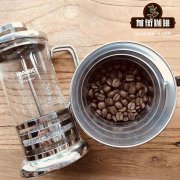
Sun exposure Coffee beans from Banke processing Plant in Woka Village, Ethiopia _ Waka Cooperative Worka Coop
Professional coffee knowledge exchange more coffee bean information please follow the coffee workshop (Wechat official account cafe_style) Chinese name Ethiopian Coffee Sun Yega Snow Fei Jetipu Town Woka Village Class processing Plant G1 English name ET Yirgacheffe Gedeb Worka Banko Natural G1 production area Jetipu Town Woka Village producer Banke

The most expensive coffee in the world: the production process of Indonesian Kopi Luwak
Professional barista communication Please follow the coffee workshop (official Wechat account cafe_style) what is the most expensive coffee in the world? Indonesian Kopi Luwak, what is more peculiar is that this kind of coffee is made from cat droppings! Its production process is also a little unbearable! In Indonesia, there is a local animal called civet, also known as masked palm civet. Musk cat is a favorite in Indonesia, Feimei.
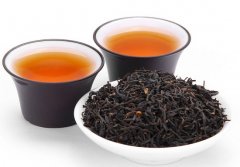
The nine steps of the complete process of black tea production explain in detail how long it takes to make black tea.
Tea is a daily drink for most of our friends. Have you ever wondered what the production process of black tea is? I wonder if my partner has ever had such a whim: what will it be like if the raw leaves are picked and eaten directly without any processing? Here, we can tell you exactly: I have tried! Although it has a little grassy aroma

Encyclopedia of Coffee talking about the positive solution of instant coffee
The decline and growth of coffee around the world has also led to a multi-dimensional development of coffee, and the deepest impact is the problem of instant coffee (Instant Coffee Powder Powder). Instant coffee has the characteristics of easy to use, breaking the usual bundles of brewing coffee, and quickly integrated into the food industry. The use of instant coffee in China

Production and processing of coffee Sidamo guji coffee beans
At present, about 25% of the Ethiopian population directly or indirectly depends on coffee production for a living. The majority of farmers use traditional planting methods. Artificial care of coffee trees, the use of organic fertilizers, do not use harmful pesticides and herbicides, etc. Therefore, most of the coffee produced by Ethiopia is organic coffee. Due to different planting methods, coffee can be divided into forest-semi-forest coffee (Forest or semi-f).

African flavor Ethiopian grade G1G2 G3 boutique coffee beans
Pre-auction process 1) farmers pick fresh coffee fruits; 2) farmers transport fresh fruits to rural cooperatives; 3) cooperatives sell fresh fruits to middlemen; 4) middlemen collect and transport fresh fruits to processing plants (washing or tanning process); 5) middlemen transport processed beans (with shell beans, Parchment Coffee) to auction houses to establish warehouses; 6) auction houses give official evaluation (

Introduction to the process of harvesting, production and processing from fruit to coffee bean
Treatment method 2 washing treatment method-1 washing and separating coffee beans: put the picked fresh coffee fruit into a pool to wash, separate the ripe fruit from the leaves, sundries, immature fruit and overripe fruit floating on the surface-2 remove the peel and pulp: the washed fresh coffee fruit is put into the peeling machine to remove the peel washing treatment method-3

Coffee treatment methods Honey treatment methods there are several ways to treat coffee
The honey treatment process is vulnerable to pollution and mildew, so it needs to be closely watched throughout the process, constantly turning, and speeding up drying, so as to avoid bad fermentation flavor. Its advantage is that it can best preserve the original sweet flavor of coffee ripe fruit, making the coffee show elegant black sugar flavor and drupe flavor, while the berry flavor also supports the basic aroma of red wine, which is considered to be a very elegant product. Honey treatment

The production process of coffee the processing process of high-quality coffee beans
Manual dripping: dripping is the most commonly used method of making fresh coffee. First put the filter paper in the filter and grind it into a medium fineness coffee powder. Generally, each cup of coffee needs about 10 grams of coffee and about 150 milliliters of water. Choose a small kettle with a thin mouth to boil water in order to control the speed and mode of water injection. The best water temperature for brewing coffee is about 93 degrees Celsius, because
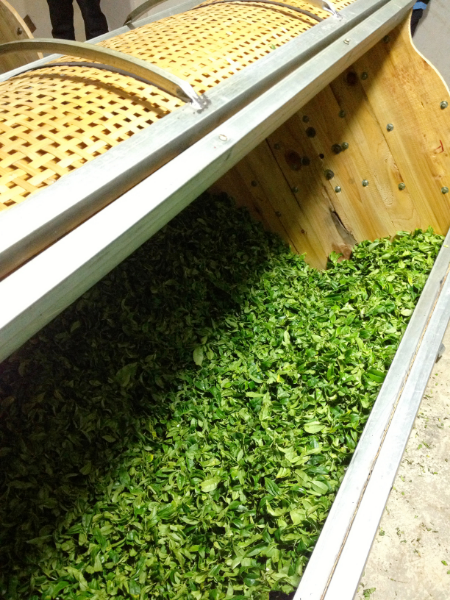
Dahongpao, Tieguanyin, Phoenix Dancong and other oolong tea production process to explain in detail what does green tea mean?
Oolong tea is mainly produced in Chinese mainland and Taiwan and has recently been produced in India, Vietnam and Nepal. Oolong tea can be machined or made by hand. High-grade oolong tea, such as high-grade Wuyi rock tea and Anxi Tieguanyin Tea, are all made by hand. Oolong tea is neither black tea nor green tea; it belongs to

The method of primary processing of small coffee beans
Technical requirements for the initial processing of small seed (Arabica seed) Coffee 1. There are two processing methods for coffee beans made from fresh coffee fruits, namely wet processing and dry processing. The first and second grade fruits are processed by wet method, and the third grade fruits are processed by dry method in areas without peeling machine and lack of water. 2. Processing technology 2.1 equipment and facilities should be equipped with fresh fruit collection pool and rainbow
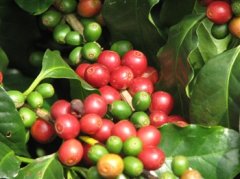
Initial processing requirements of Yunnan Coffee (Arabica species)
Technical requirements for the initial processing of small seed (Arabica seed) Coffee 1. There are two processing methods for coffee beans made from fresh coffee fruits, namely wet processing and dry processing. The first and second grade fruits are processed by wet method, and the third grade fruits are processed by dry method in areas without peeling machine and lack of water. 2. Processing technology 2.1 equipment and facilities should be equipped with fresh fruit collection pool and siphon

Introduction of Manor in Fine Coffee Bean Flavor and taste producing area of Vietnam
Vietnam's geographical location is very favorable for coffee cultivation. Southern Vietnam has a hot and humid tropical climate, which is suitable for growing ROBUSTA coffee, while the north is suitable for growing ARABICA coffee. Coffee production in Vietnam has the following characteristics: (1) because there is no effective way to deal with fallen leaves, medium-grain coffee was selected as the main variety in the early 1980s. (2) take planting technology as

How to deal with the processing of single beans in Santa Barara Manor? how to grade the single beans in Santa Barara Manor?
For the exchange of professional baristas, please follow the coffee workshop (Wechat official account cafe_style). The COPAN Copan producing area of Santa Barara Manor in Honduras is located in the city of Copan in western Honduras, of which the most famous is the local Mayan site. The region is adjacent to Guatemala and regions like this remind me to attach importance to the actual origin of coffee rather than to producing countries. In fact, there is some force in the division of countries.

Magnolia fragrance single fir Oolong tea production process sharing Magnolia fragrance single fir belongs to what kind of tea tree?
Hello, fans of Phoenix Dancong, if you open this article, you have opened my eyes! Because it means that you are curious about this complex oolong tea and you want to know more. I have noticed that many tea drinkers have a rough understanding of the production of oolong tea, but they do not seem to know each in detail.

90 + single bean coffee bean introduction flavor description planting area planting variety
Professional baristas Please follow Coffee Workshop (Wechat official account cafe_style) Ninety Plus Ninety plus is an internationally renowned coffee bean production and sales company, and is famous for providing rare and unique raw coffee beans. In addition to working directly with coffee farmers, there is a 134-hectare coffee farm in Panama. 2007 is exactly what customers have been since its establishment.

Introduction to the flavor description of Cajan coffee beans in Burundi Bulongdi Champion processing Plant
Burundi has the most diverse and successful coffee industry in the world, and has its own characteristics. Coffee in this country was introduced by Belgian colonists in 1930 and is now grown only on small farms. Unfortunately, many of these farms are on the border with war-torn Rwanda, putting pressure on coffee production. Coffee produced in Burundi.

A brief introduction to the Market Price of High-quality Coffee Bean varieties in Vietnam
Two years ago, I read a survey report that Vietnam has overtaken Colombia in coffee bean production, ranking second in the world after Brazil. But it is planted with Robusta trees, and there is still a big gap in the quality of coffee beans compared with countries such as Colombia and Brazil. Vietnam's coffee production is growing. Among Vietnam's new export products, tea ranks first and coffee ranks first.

Introduction to the method of processing in producing areas for describing the Flavor of single Bean in Santa Barara Manor
For the exchange of professional baristas, please follow the coffee workshop (Wechat cafe_style) Honduras Honduran population: 8250000 although it is not described by HCAFE as a coffee growing area, many roasters label coffee from the Santa Barbara region of Honduras, and several coffee areas cross the border into Santa Barbara (the government of a country).
Fine coffee technology Technical requirements for the initial processing of Yunnan Coffee
# FormatImgID_0# small seed (Arabica seed) Coffee initial processing Technical requirements 1. Processing methods there are two processing methods for coffee beans made from fresh coffee fruits, namely wet processing and dry processing. The first and second grade fruits are processed by wet method, and the third grade fruits are processed by dry method in areas without peeling machine and lack of water. 2. Processing technology 2.1 equipment and facilities should be provided with fresh food